

Term 6, Week 5 – Water Safety
Water Safety
This week, we talked to the children about water safety:
- What are the risks?
- What can you do to keep yourself safe?
In our daily reviews, we reminded the EYFS and KS1 children:
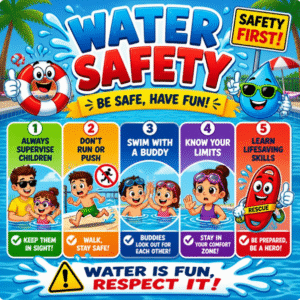
Water is amazing—we can splash, swim, and have fun… but we also need to know how to stay safe.
We asked the children how to stay safe – here are some of their answers:
- If you want to play in water, you must always have a grown-up with you
- Stay close to your grown-up, in ‘arms reach’—this means your grown-up is close enough to reach you
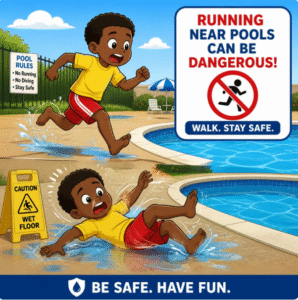
- No running. We walk, not run, near water because the ground can be slippery… and we might fall in!
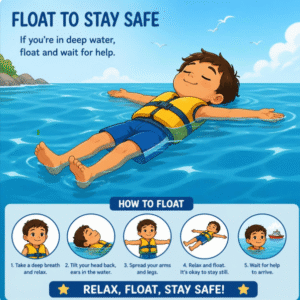
- If you fall in water: float like a starfish. Lean back, keep your face up, and stay calm
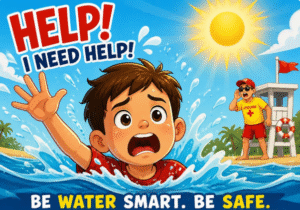
- If you need help, shout HELP as loud as you can
In our daily reviews, we reminded the KS2 children:
Water is brilliant fun – even strong swimmers can get into trouble if they don’t think carefully. So this isn’t about being scared— it’s about being smart and in control.
What can we do to stay safe and smart around water?
Most important safety rule: STOP – LOOK – THINK
Before we go near water, always stop, look and ask our self the following questions:
- What kind of water is it?
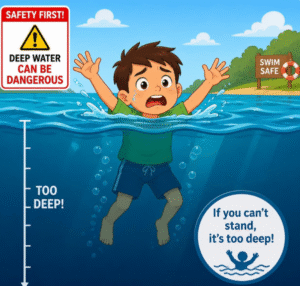
- Is it deep?
- Is it safe?
- Is there someone watching?
Begbrook’s Water Rules to Remember:
- Never swim alone – even good swimmers can get tired, cramp, or panic
- Cold water awareness: in places like rivers, lakes, or the sea, the water can be very cold, even in summer. If you suddenly jump in, your body can: gasp, panic and you may struggle to breathe. That’s why we never jump into unknown water
- No unsafe behaviour: sometimes people dare each other to: jump from high places, swim too far and show off but being brave isn’t about taking risks. Being brave is saying: ‘No, that’s not safe”
- If someone else gets into trouble in water: don’t jump in straight away—you could get into trouble too. Instead: call for help, shout for a grown-up or lifeguard or throw something that floats if you can
- If you fall into water, remember this simple rule: FLOAT AND STAY CALM. Lean back, keep your face up and try to control your breathing
Always know the dangers:
- Currents or waves
- Slippery edges
- Things under the water you can’t see
- It’s important to remember that water doesn’t always look dangerous—that’s why we have to think first
Enjoy the water safely