

Term 1, Week 6 – World Mental Health Day
World Mental Health Day
As part of World Mental Health Day, we spoke to children about mental health in our weekly theme this week. We talked about what we mean by ‘mental health’ and what we can do to promote a positive mental health.
In daily reviews and Friday’s PSHE session, we used the following information to talk to our children about mental health:
What do we mean by mental health?
Everyone has mental health. Our mental health refers to the way we think, feel, and behave, and how we cope with life’s ups and downs. Just like we need to take care of our bodies so that we don’t become unwell, we also need to take care of our feelings. Everyone feels upset or worried sometimes – that’s normal and doesn’t mean you have a problem with your mental health. When someone is feeling worried or sad often and finds it hard to cope with their feelings, thoughts or behaviour, this might mean they are experiencing mental health difficulties. Some examples of this are:
- Feeling really worried all the time, even when nothing scary is happening.
- Feeling very sad and not knowing why.
- Getting angry quickly or having trouble calming down.
- Not wanting to play or talk to anyone.
- Finding it hard to sleep, eat, or concentrate.
If you are worried about your mental health, it is really important to talk to one of your 5 safe adults. Talking about how you are feeling, helps you to understand how you are feeling and will help you to feel better. Your safe adult can help you with strategies to manage how you’re feeling.
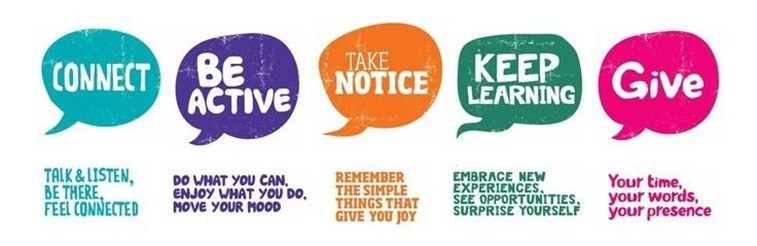
At Begbrook, we use the 5 ways of wellbeing to help us to keep feeling good. We talked about the 5 ways of wellbeing and thought about different activities we can do, linked to each way of wellbeing, to promote a positive wellbeing:
Connect
Spend time with family, friends, and teachers. Talk, listen, and share.
“Playing with friends and talking to someone you trust helps you feel loved and safe.”
Be Active
Move your body—run, dance, play, or go for a walk.
“Exercise helps your body and your brain feel better.”
Take Notice
Look around and notice the little things—like the weather, nature, or how you feel.
“Stopping to notice things helps you feel calm and happy.”
Keep Learning
Try something new—read a book, learn a game, or ask questions.
“Learning new things helps your brain grow and makes you feel proud.”
Give
Be kind—help someone, share, or say something nice.
“Doing kind things makes you and others feel good.”
For advice and guidance for parents/carers about children’s mental health, please follow the links below:
https://www.nhs.uk/every-mind-matters/supporting-others/childrens-mental-health/
https://www.youngminds.org.uk/
https://www.childrensmentalhealthweek.org.uk/